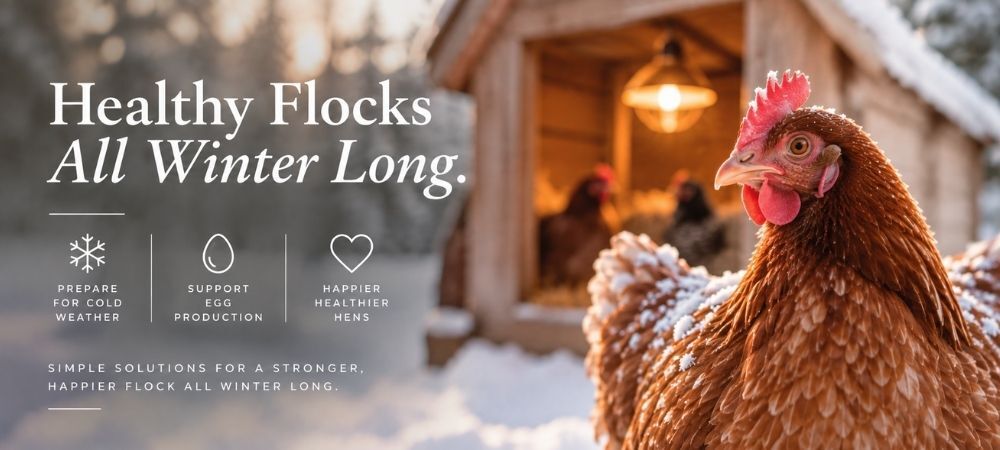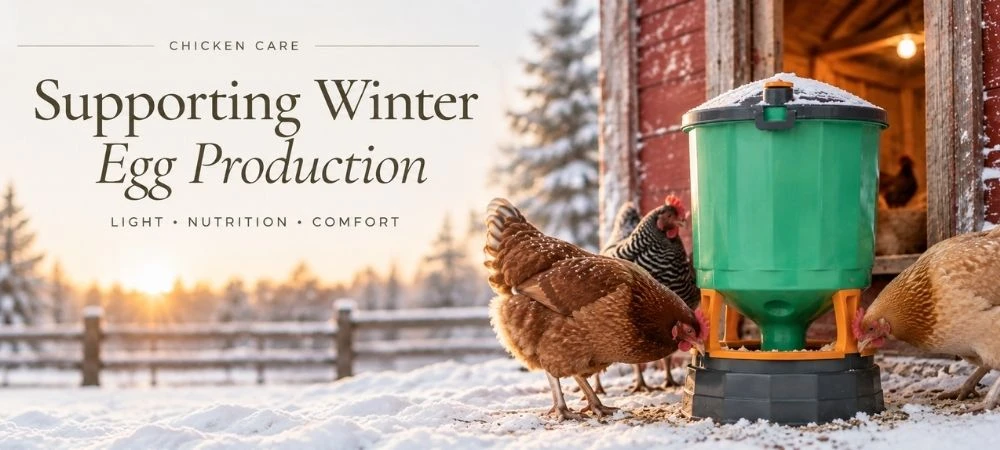
How to Support Healthy Egg Production Through Winter
As the days get shorter and temperatures drop, it’s normal to notice fewer eggs in the nesting box. Even healthy, productive hens often slow down during winter.
That’s because egg production is influenced by more than nutrition alone. Daylight, temperature, moisture, stress, hydration, and overall flock health all play a role.
While you can’t control the weather, you can create a winter environment that helps your hens stay comfortable, healthy, and productive.
Why Do Chickens Lay Fewer Eggs in Winter?
One of the biggest factors is daylight.
Hens generally need around 14–16 hours of light per day to maintain consistent egg production. As daylight hours decrease in fall and winter, their reproductive cycle naturally begins to slow.
Cold weather creates another challenge. Chickens use more energy to maintain their body temperature, while molting, nutrition, age, breed, and stress can also influence how many eggs make it into the basket.
The good news? A few simple adjustments can help.

- Give Them Enough Light
Shorter days are one of the primary reasons egg production declines during winter. Supplemental lighting can extend your flock's “day” and help support a more consistent laying schedule.
If you choose to supplement light, use a timer to create a predictable routine. Adding the extra hours before sunrise allows hens to experience a natural sunset so they can settle onto their roosts normally at night.
PRODUCT PICK | LIGHT THE COOP
Coop Lighting Essentials
Give your flock the additional light they need during shorter winter days.
- Keep the Coop Comfortable
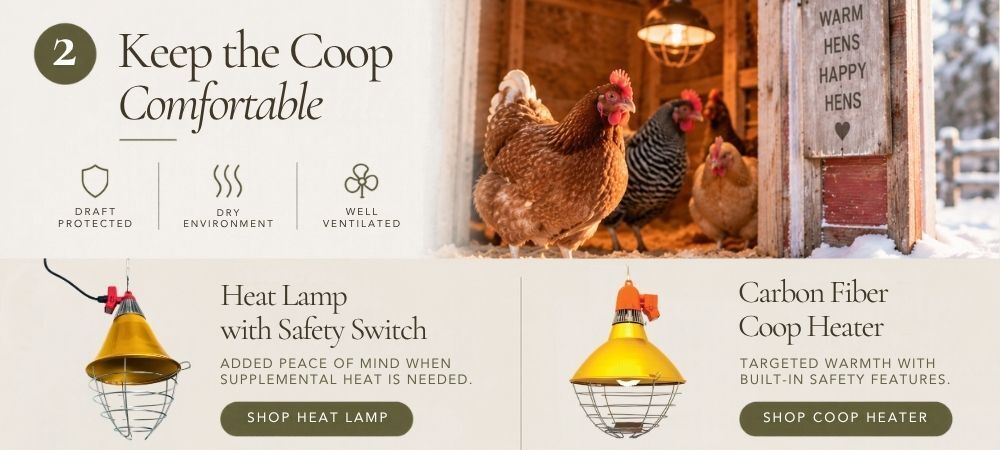
Chickens are naturally cold-hardy, and healthy adult birds don't necessarily need a heated coop. But during extreme cold, providing a safe source of supplemental warmth can help keep the coop more comfortable. Stromberg's recommends safe, minimal heating when conditions require it.
The goal isn't to make the coop feel like summer. Focus instead on providing a dry, draft-protected and well-ventilated environment where birds can escape severe cold.
Whenever adding a heat source, proper installation and fire safety are especially important.
PRODUCT PICK | SAFER SUPPLEMENTAL HEAT
Heat Lamp with Safety Switch
Designed to automatically shut off if the lamp falls or tilts, adding an extra layer of protection when supplemental heat is needed.
ANOTHER OPTION
Carbon Fiber Coop Heater
Provides targeted warmth with a protective outer grill and built-in kill switch for added safety.
SHOP CARBON FIBER COOP HEATER →
- Keep Nest Boxes Clean + Dry
Cold isn't the only winter concern. Moisture can be an even bigger problem inside the coop.
Snow, wet feet, droppings and condensation can create damp conditions. Proper ventilation helps remove moisture from the coop while keeping harsh drafts away from birds at roosting level.
Don't forget about the place where the eggs actually end up: the nest box.
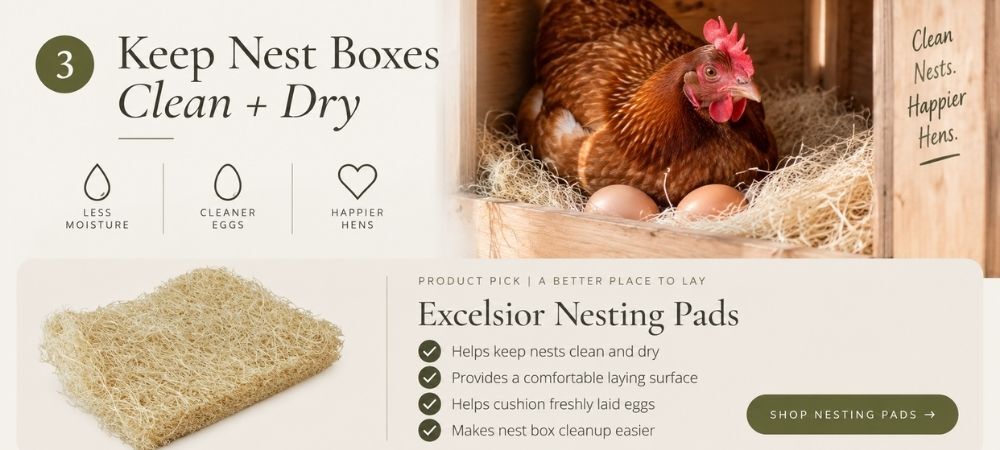
A clean, dry nesting area gives hens a more comfortable place to lay and helps keep freshly laid eggs cleaner.
PRODUCT PICK | A BETTER PLACE TO LAY
✔ Helps keep nests clean and dry
✔ Provides a comfortable laying surface
✔ Helps cushion freshly laid eggs
✔ Makes nest box cleanup easier
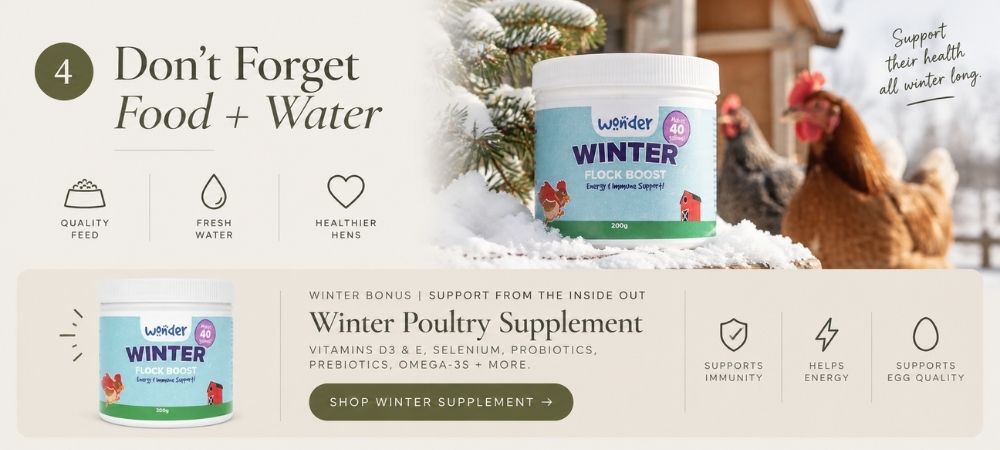
- Don't Forget Food + Water
Light and warmth can't make up for poor nutrition or dehydration.
Continue providing a complete, balanced diet and constant access to fresh water throughout winter. Cold weather can increase your flock's energy demands, making consistent access to quality feed especially important.
Water is also essential for digestion and egg production, so frozen waterers can quickly become a problem during cold weather.
WINTER BONUS | SUPPORT FROM THE INSIDE OUT
Winter Poultry Supplement
Formulated with vitamins D3 and E, selenium, probiotics, prebiotics, omega-3s and other ingredients designed to support energy, immunity and egg quality during cold weather.
SHOP WINTER POULTRY SUPPLEMENT →
A Healthy Flock Comes First
Seeing fewer eggs in winter doesn't necessarily mean something is wrong. Seasonal changes are a normal part of raising chickens.
Instead of focusing only on what's in the egg basket, look at your flock as a whole.
Give them enough light. Keep them comfortable. Control moisture. Provide quality nutrition and fresh water.
Get those basics right, and you'll give your hens the support they need to stay healthy through winter—and ready for the longer days ahead.
Keep Your Flock Laying Through Winter
Find lighting, heating, nesting supplies and other cold-weather essentials to help your flock thrive all season long.