

Tips for Collecting Cleaner Eggs
If you have backyard chickens, you know that cleaning fresh eggs is often just part of the daily routine. While a little dirt is normal, cleaner eggs are easier to handle, safer to store, and require less washing before use.
Fortunately, a few simple management practices can dramatically reduce dirty eggs before they ever leave the nest box.
Here are some practical ways to collect cleaner eggs every day.
Prevent Dirt Before It Happens
The best way to get cleaner eggs is to stop them from getting dirty in the first place.
Give Your Hens Enough Nesting Space
Overcrowded nest boxes quickly become messy. When several hens try to use the same nesting area, eggs are more likely to get stepped on or soiled.
A good rule of thumb is:
-
- One nest box for every 3–4 hens
- Keep nesting areas quiet and comfortable
- Place boxes slightly lower than roosts to discourage sleeping inside them
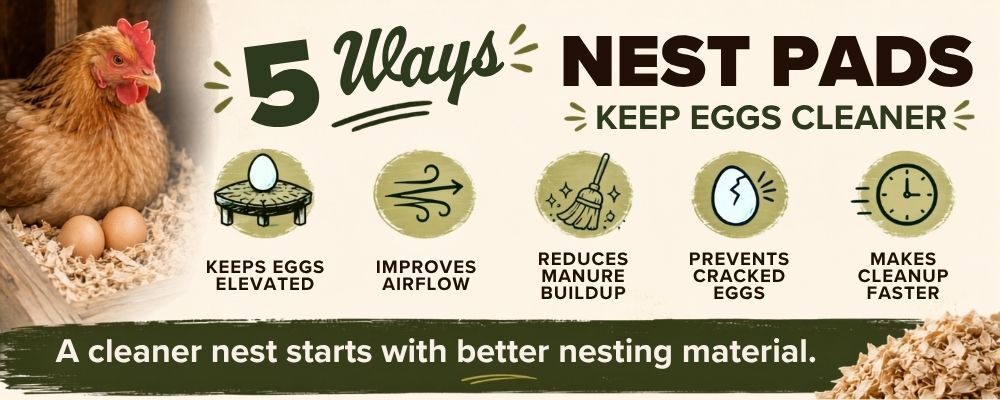
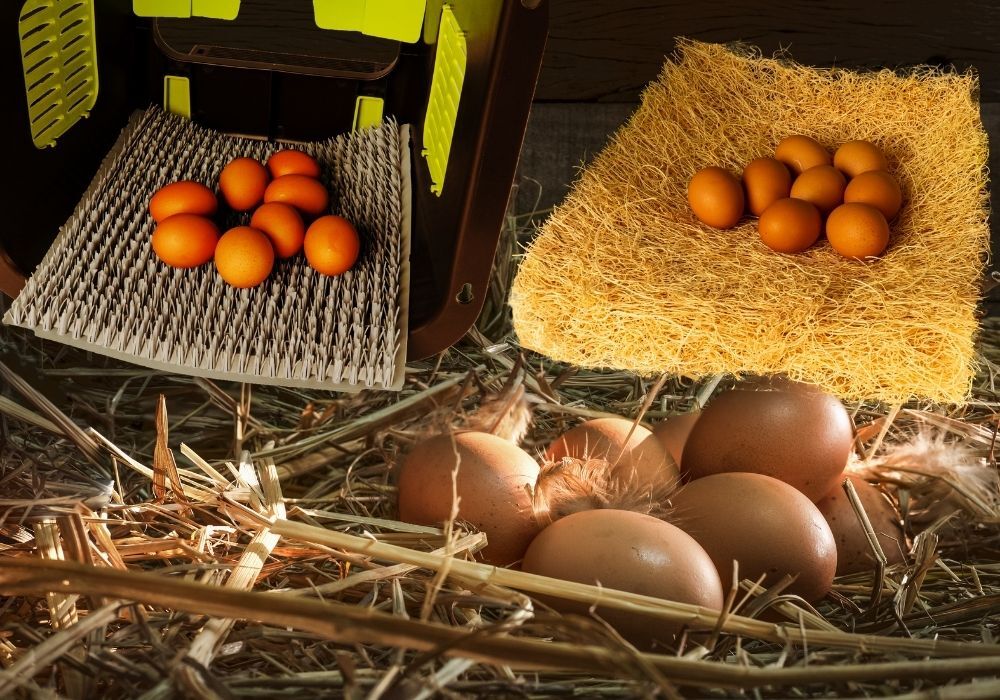
Use Quality Nest Pads
Nest pads help create a cleaner, softer place for hens to lay.
Benefits include:
-
- Less dirt and manure on eggs
- Better cushioning to reduce cracks
- Improved airflow to keep nests drier
- Easier cleaning compared to loose bedding
Nest pads also make routine coop maintenance much faster since they can simply be replaced or cleaned as needed.
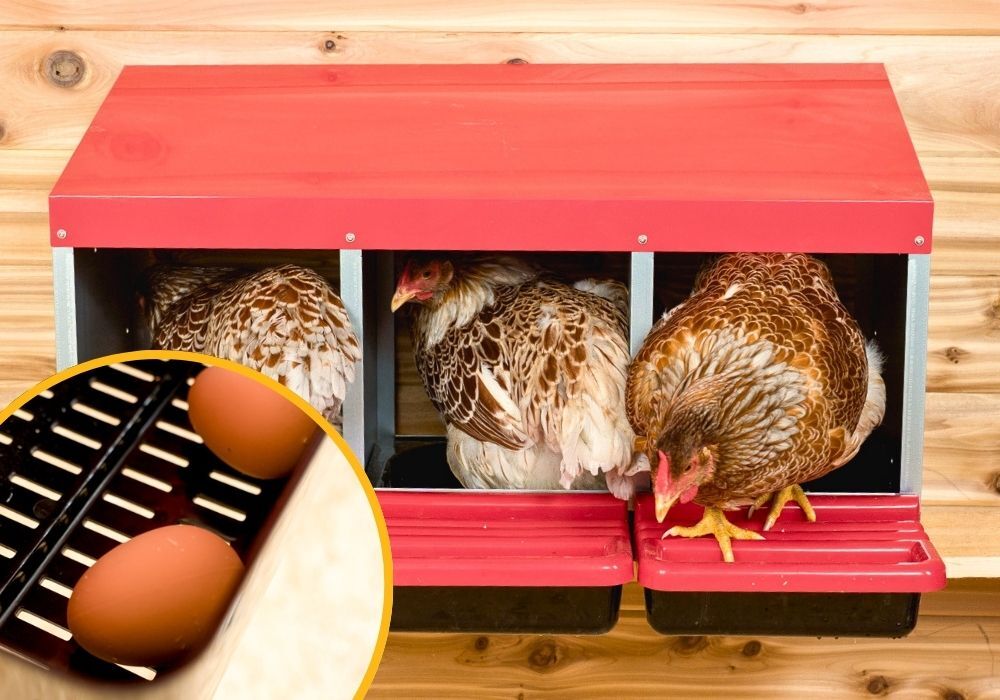
Let Eggs Roll to Safety
If you're building or upgrading your coop, consider using slightly sloped nesting boxes or roll-away nest boxes.
These designs gently move freshly laid eggs away from the hen immediately after laying, helping prevent:
-
- Stepping
- Pecking
- Broken eggs
- Dirty shells
Even a slight slope can make a noticeable difference.

Collect Eggs Frequently
Gather eggs at least once or twice every day.
The longer eggs remain in the nest box, the more likely they are to become:
-
- Stepped on
- Covered with droppings
- Sat on by another hen
- Accidentally cracked
During hot weather, frequent collection also helps preserve egg quality.
Discourage Sleeping in Nest Boxes
Hens should sleep on roost bars—not inside nesting boxes.
When chickens spend the night in nest boxes, they leave droppings behind that dirty fresh eggs the next morning.
To encourage better habits:
-
- Block nest box access at dusk if needed
- Install comfortable roost bars
- Keep nesting boxes available only during laying hours
Encourage Nest Box Laying
Floor eggs are almost always dirtier than eggs laid in nesting boxes.
Clean, inviting nesting areas encourage hens to use them consistently.
Keeping bedding fresh and comfortable helps establish good laying habits, especially for younger hens.
Maintain a Clean Coop
Even the best nesting setup can't stay clean if the coop itself isn't maintained.
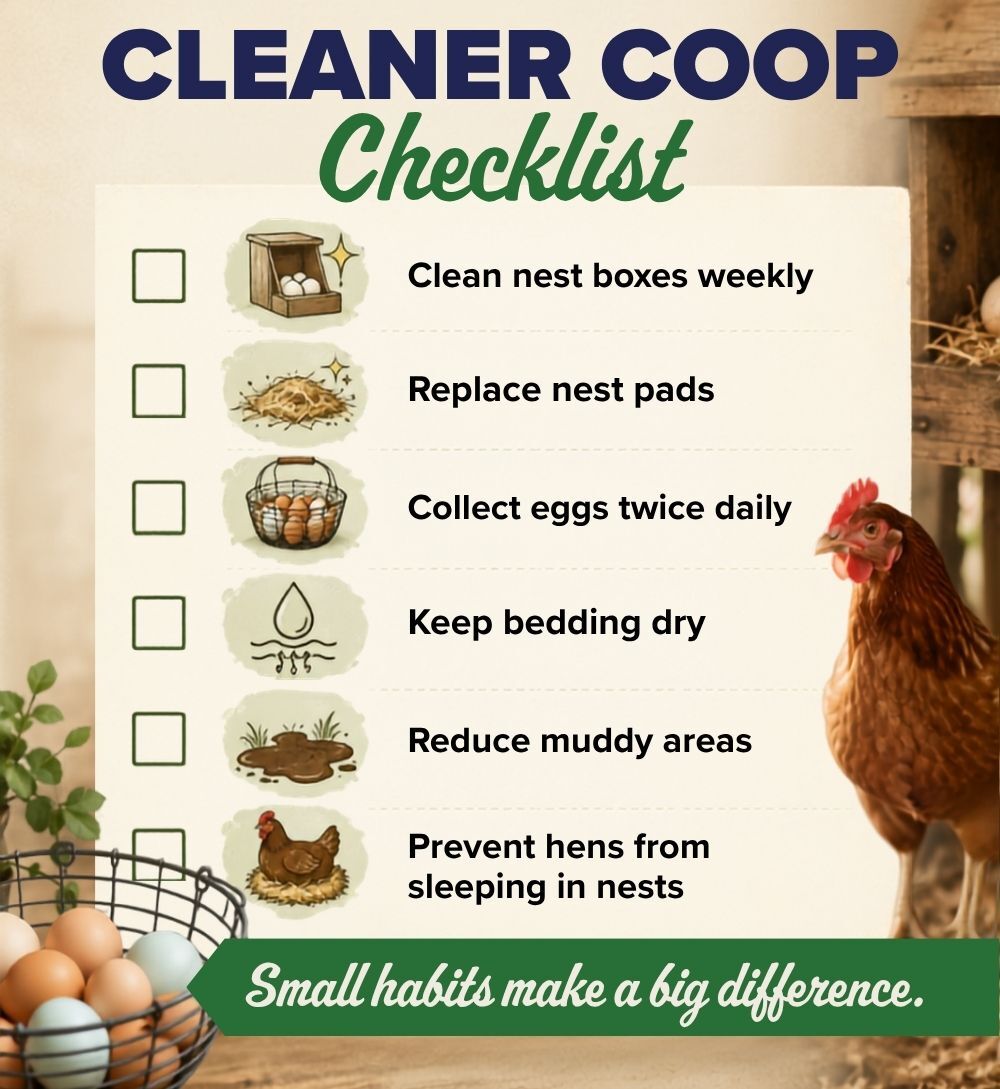
Clean Nest Boxes Regularly
A consistent cleaning routine goes a long way.
A good schedule is:
-
- Spot clean throughout the week
- Clean nest boxes weekly
- Deep clean monthly
- Replace worn nest pads as needed
Fresh nesting material means cleaner eggs.
Keep Bedding Dry
Moisture is the enemy of clean eggs.
Wet bedding quickly turns into muddy nesting material that stains eggshells.
Watch for:
-
- Roof leaks
- Condensation
- Spilled waterers
- Rain blowing into the coop
Dry bedding keeps both hens and eggs cleaner.
Don't Forget the Chicken Run
Dirty feet create dirty eggs.
If your chickens walk through mud before entering the coop, they'll carry that mess directly into the nest boxes.
To help reduce tracked-in dirt:
-
- Improve drainage
- Add gravel in muddy areas
- Refresh run bedding regularly
- Keep high-traffic areas dry
Enjoy Cleaner Eggs Every Day
Cleaner eggs start with a cleaner environment.
By providing comfortable nesting areas, using quality nest pads, collecting eggs regularly, and maintaining a dry, clean coop, you'll spend less time scrubbing eggs and more time enjoying your flock.
A few simple changes can lead to cleaner eggs, healthier hens, and a more enjoyable backyard chicken experience.