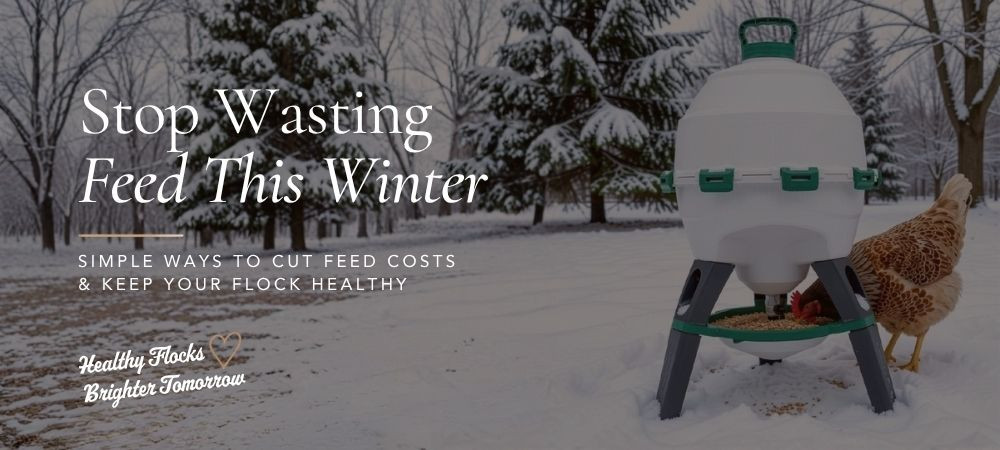
Stop Wasting Feed This Winter
Simple Ways to Cut Feed Costs & Keep Your Flock Healthy
When temperatures drop, it’s normal for chickens to eat more. They’re using extra energy to stay warm, after all.
But if you’re going through feed much faster than expected, your flock may not be eating all of it.
Winter conditions can turn everyday feed waste into a surprisingly expensive problem. Wet ground, more time inside the coop, hungry pests, and messy feeding habits can all send perfectly good feed somewhere other than your chickens.
Where Is All That Feed Going?
Spilled on the Ground
Chickens naturally scratch, peck, and toss feed around. Shallow or open feeders make it especially easy for feed to end up on the coop floor.
Lost to Rain, Snow & Mud
Once feed hits wet ground or damp bedding, it can quickly become unusable. Moisture can also lead to mold and spoilage.
Eaten by Uninvited Guests
Mice, rats, squirrels, and wild birds are looking for food during the colder months, too. An open feeder can quickly become an all-you-can-eat buffet.
Simply Overfed
Keeping more feed available than your flock can reasonably eat may seem convenient, but excess feed is more likely to be scattered, contaminated, or eaten by pests.
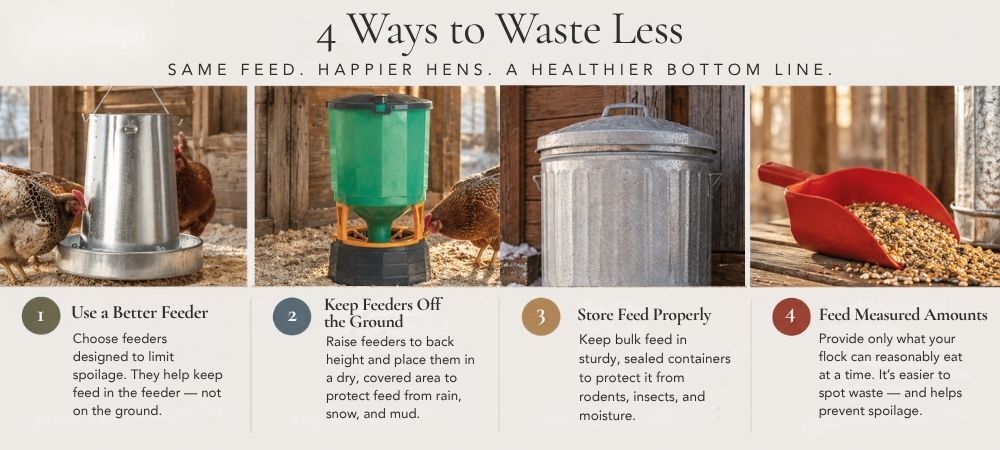
4 Simple Ways to Waste Less Feed
- Choose a Feeder Designed to Reduce Spillage
Feeders that limit access to the feed help prevent chickens from scratching, billing, and tossing it onto the ground.
Less mess. Less waste. More feed for your flock.
- Get Feeders Off the Ground
Raise feeders to approximately back height for your birds. This makes it harder for chickens to scratch bedding into the feeder or kick feed onto the floor.
Place feeders in a dry, covered area whenever possible to protect feed from rain and snow.
- Store Feed Properly
Your feeder isn't the only place pests can help themselves.
Keep bulk feed in sturdy, sealed containers that help protect it from rodents, insects, and moisture. Clean up spills around storage areas before they become an invitation.
- Pay Attention to How Much You're Feeding
Keep an eye on how quickly your flock actually consumes its feed. Providing reasonable amounts at a time makes it easier to spot unusual increases in consumption — and waste.
Feed Waste Costs More Than Money
Reducing waste isn't just about stretching your feed budget.
Feed scattered through damp bedding can spoil or develop mold. Leftover feed can attract rodents and other pests, and those pests may attract larger predators to your coop.
Keeping your feeding area clean and dry helps protect your feed, your coop, and your flock.
A Little Feed Management Goes a Long Way
Winter already asks more of your flock — and your feed supply. A few simple changes can help make sure the calories you're paying for are actually going toward keeping your birds warm, healthy, and fed.